
A Real Theological Difference, Not Just a Style Preference
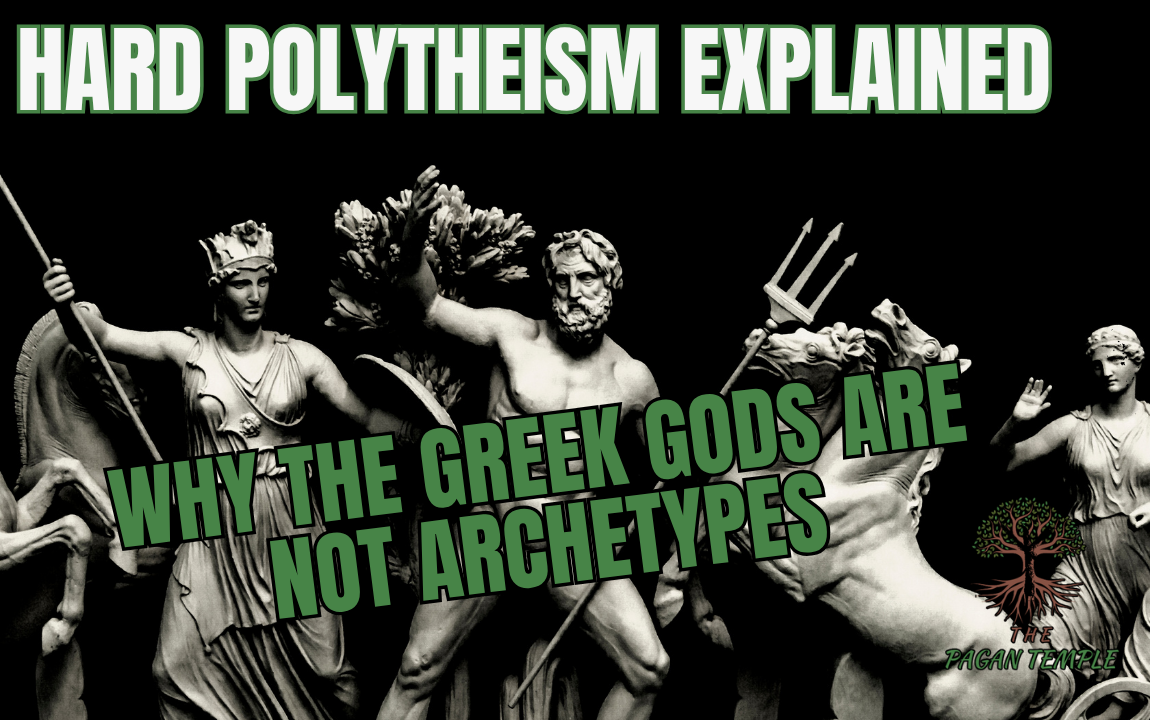
Walk into different corners of modern paganism and you will find genuinely different underlying theological assumptions about what the gods actually are, not just different aesthetic or ritual styles layered on top of the same basic belief. This matters for understanding Hellenismos specifically, because most modern Hellenic practitioners operate from a particular theological position called hard polytheism, and understanding what that means, and what it is being contrasted against, clarifies a lot about how Hellenic practice actually works.
What Hard Polytheism Actually Claims
Hard polytheism treats the gods as distinct, individual beings, each with their own independent personality, will, domain, and existence, not reducible to each other and not reducible to aspects or faces of one single underlying divine source. On this view, Athena and Aphrodite are not two expressions of one goddess archetype. They are two separate beings with their own distinct identities, who can, and in myth sometimes do, disagree with each other.
This is the dominant working theological position across the major modern reconstructionist Hellenic organizations, including Hellenion, which explicitly orients its approach around treating the gods this way.
What This Is Being Contrasted Against
Soft polytheism, by contrast, treats the gods as more fluid, sometimes understanding different named deities across different cultures as various expressions or faces of a smaller number of underlying universal divine forces or archetypes. On this view, a sky father figure across multiple cultures might be understood as fundamentally pointing toward the same underlying divine principle, expressed differently in different cultural contexts.
An archetypal framework, often associated with Jungian psychological approaches to mythology, goes a step further, treating gods primarily as symbolic representations of universal psychological patterns within the human mind, useful for self-understanding and personal growth, regardless of whether they have any independent existence outside human psychology at all.
Why Most Hellenists Land on Hard Polytheism Specifically
This is not an arbitrary preference. Ancient Greek religious and philosophical sources, when they address the question directly, generally treat the gods as genuinely distinct individuals with real independent will, capable of disagreeing, competing, and acting according to their own distinct character, rather than as interchangeable expressions of one underlying force. Modern reconstructionism, committed to building practice from the documented ancient framework rather than from a different modern theological system, tends to follow that documented historical position.
How This Shows Up Directly in the Myths Themselves
The Iliad is one of the clearest pieces of evidence for hard polytheism as the operating framework of ancient Greek religious imagination, even though it is poetry rather than theology. Throughout the poem, the gods take genuinely opposing sides in the Trojan War, with Hera and Athena actively supporting the Greeks while Aphrodite and Apollon support the Trojans, and their disagreements are not surface decoration. They reflect real, independent divine wills in direct conflict with each other, sometimes resolved only through Zeus's superior authority forcing a temporary peace among the other gods. A genuinely soft polytheist or archetypal framework, where these figures are simply different faces of one underlying force, struggles to make sense of this kind of sustained, consequential divine disagreement in a way that hard polytheism handles naturally.
A Common Objection, and a Reasonable Response
A frequent pushback goes something like this: didn't the ancient Greeks themselves practice interpretatio, identifying their own gods with foreign deities, like equating Zeus with the Egyptian Amun or the Roman Jupiter? Doesn't that prove ancient polytheism was actually softer and more fluid than the hard polytheist framework suggests?
This is a fair question, and the honest answer is that interpretatio was real, well documented ancient practice, but it operated differently than modern soft polytheism does. Ancient interpretatio generally treated structurally and functionally similar gods across different cultures as plausibly being the same underlying deity known by different names and approached through different cultural lenses, a claim about identity across cultures, rather than treating distinct deities within one's own pantheon, like Athena and Aphrodite, as interchangeable faces of a single force. Hard polytheism is fully compatible with the idea that Zeus and Jupiter might be the same god under different cultural names. It is specifically incompatible with treating Zeus and Poseidon, two distinct figures within the same pantheon, as simply two aspects of one underlying divine principle. That distinction is what actually does the theological work here, and it survives the interpretatio objection intact.
This Is Not a Claim That Hard Polytheism Is More Spiritually Correct
Worth being explicit about something here: this site does not present hard polytheism as a superior or more valid spiritual position compared to soft polytheism or archetypal approaches practiced elsewhere in modern paganism. Plenty of practitioners across many traditions find real meaning and value in archetypal or soft polytheist frameworks, and those are legitimate approaches to spirituality in their own right. The point here is narrower and more specific: this is the theological position that the documented ancient Hellenic source material and the major modern reconstructionist Hellenic organizations actually operate from, and understanding that is necessary for understanding how Hellenismos works as a specific tradition.
What This Means Practically for How You Relate to the Gods
If you are approaching Hellenismos from a hard polytheist framework, that shapes how you build relationship with specific deities. You are not choosing a symbol that represents an aspect of your own psyche to work with for personal growth purposes, though personal growth might well be a real side effect of the relationship. You are entering into a relationship with what practitioners understand to be a genuinely independent being, with its own will and its own standards for what a good relationship with it looks like, governed by the reciprocal logic of kharis discussed elsewhere on this site.
This also explains why modern Hellenists are often careful to specify which particular epithet or aspect of a god they are addressing in prayer, discussed in the practical guide on prayer composition. If the gods are genuinely distinct individuals with specific domains and functions, addressing the right aspect for your purpose is not decoration. It follows logically from taking the underlying hard polytheist framework seriously.
It is worth acknowledging honestly that personal religious experience does not always arrive pre-sorted into a clean theological category. Plenty of practitioners report experiences that feel ambiguous between a hard polytheist and a softer or more archetypal reading, and reconstructionism's emphasis on documented ancient framework as a starting point does not require you to dismiss or override genuine personal experience that does not fit neatly into that framework. The position this site takes is simply that hard polytheism is the documented historical default for how ancient Hellenic religious thought generally operated, and the most internally consistent starting point for building a reconstructionist Hellenic practice, not that personal religious experience must conform to it perfectly in every single instance.