Celtic Paganism
Education Builds UnderstandingCeltic paganism is one of the most widely recognized branches of modern polytheism, and also one of the most misunderstood. When most people hear "Celtic," they picture a blurry mash of fairy tales, Druidic stone circles, and green rolling hills. Some of that is rooted in something real. A lot of it isn't.
This page is meant to cut through the noise and give you a clear, honest picture of what Celtic paganism actually is, where it comes from, what the major branches look like today, and what it means to practice it in the modern world.
Whether you're just starting to explore or you've been walking a Celtic path for years, there's something here for you.
What Is Celtic Paganism?
Celtic paganism is a broad term for the religious and spiritual traditions rooted in the ancient Celtic-speaking peoples of Europe. These weren't a single unified culture. The Celts were a collection of related tribal groups spread across a massive geographic area, from the British Isles and Ireland to Gaul (modern France), Iberia, and as far east as Galatia in modern Turkey.
What they shared was a family of related languages, cultural practices, and a general worldview that modern scholars call Celtic. Within that framework, there was enormous variation in mythology, ritual, local deity veneration, and cosmology.
Modern Celtic paganism draws on the surviving mythology, archaeology, folklore, and historical records of these peoples to reconstruct and revive those spiritual traditions. It isn't a single religion with a rulebook. It's a family of related paths, each rooted in a specific cultural and geographic tradition.
The Problem with Sources (And Why It Matters)
Before we go any further, this needs to be said plainly: Celtic paganism has a source problem.
Most of what we know about ancient Celtic religion comes from three places, and none of them are without complications.
Roman and Greek accounts. Writers like Julius Caesar and Strabo documented Celtic peoples, including their priests (Druids), their rituals, and their gods. The problem is that these were outsiders, often writing to justify conquest or satisfy curiosity. They filtered Celtic religion through a Roman lens and weren't exactly neutral observers.
Medieval manuscripts. Much of the surviving Celtic mythology, especially Irish and Welsh material, was written down by Christian monks during the medieval period. The Irish texts like the Lebor Gabála Érenn and the tales of the Ulster Cycle are invaluable. But they were recorded centuries after the original traditions and shaped by Christian editors who had their own agendas.
Archaeology. Votive deposits, sacred sites, inscriptions, and material culture fill in a lot of gaps. But artifacts don't always explain themselves. A carved stone figure or a ritual deposit tells you something happened, not always why or what it meant.
This doesn't mean we know nothing. We know quite a bit. But honest Celtic paganism requires you to hold what's reconstructed, what's inferred, and what's clearly modern with some transparency. The practitioners who do this well earn real respect.
The Major Branches of Celtic Paganism
Gaulish Polytheism (Galatibessus / Gaulish Reconstructionism)
Gaul covered most of what is now France, Belgium, Switzerland, and parts of northern Italy. The Gauls were the Celtic peoples who came closest to direct contact with Rome, and as a result, a significant amount of information about them survived through Roman sources and epigraphy (inscribed dedications to deities).
Hundreds of Gaulish deity names are attested in stone inscriptions, many of them regional or tribal gods with no surviving mythology. This makes Gaulish reconstructionism heavily archaeological and epigraphic in character.
Key deities include:
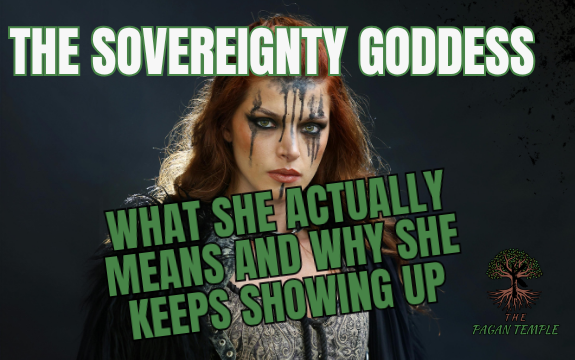
- Epona, goddess of horses and sovereignty
- Cernunnos, the antlered deity associated with animals, nature, and the underworld
- Taranis, a thunder god
- Lugus, a widely attested deity connected to crafts, commerce, and possibly cognate with the Irish Lugh
- Sirona, a goddess associated with healing springs
Gaulish paganism is sometimes called Galatibessus, a reconstructed Gaulish phrase meaning roughly "the custom of the Galatae." It's one of the more scholarly-driven branches, partly because there's no surviving mythology to lean on, so practitioners have to work hard with what the stones actually say.
Irish Paganism (Gaelic Polytheism / Irlandes Tradition)
Irish paganism has the richest surviving mythology of any Celtic tradition. The Irish texts, written down in the medieval period but preserving much older oral material, give us the Tuatha Dé Danann, the mythological cycle, the Ulster Cycle, the Fenian Cycle, and a cosmological and ritual framework that other branches simply don't have.
This is both a gift and a complication. Because the Irish material is so rich, it often bleeds into other Celtic paths in ways that aren't always historically justified. Lugh is Irish. Assuming he belongs to your Brythonic practice without examination is sloppy work.
The Tuatha Dé Danann are the divine beings of Irish mythology, sometimes called gods, sometimes ancestors, sometimes something harder to categorize. They include:
- The Dagda, a father-god associated with abundance, wisdom, and the earth
- Morrigan, a goddess of fate, war, and sovereignty, often appearing as a triple goddess
- Lugh, associated with skill, craft, light, and kingship
- Brigid, a goddess of healing, poetry, and smithcraft
- Manannán mac Lir, lord of the sea and the otherworld
The Irish tradition also preserves one of the clearest pictures of the Celtic otherworld. The Sídhe, the sacred mounds and liminal spaces where the divine intersects the mortal, and the concept of the Land of Youth (Tír na nÓg) are deeply rooted in Irish cosmology.
Modern Irish paganism often involves veneration of local land spirits, engagement with the ancestral dead, and observance of the Gaelic seasonal calendar.
Scottish Gaelic Paganism
Scottish Gaelic tradition shares deep roots with Ireland. The Gaelic language family connects them, and there was significant cultural exchange across what is now the Irish Sea. Many of the same deities and mythological figures appear in both traditions, though with distinct regional character.
Scottish Gaelic paganism also draws heavily on folklore, particularly the rich body of material collected in the Carmina Gadelica, a 19th-century collection of prayers, charms, and hymns from the Scottish Highlands and Islands. While this material is filtered through Christian influence, many practitioners find deep animist and pre-Christian resonance in it.
The concept of the Cailleach, the great hag of winter and landscape sovereignty, is especially prominent in Scottish (and some Irish) traditions. She's one of the most striking figures in Gaelic cosmology and doesn't map neatly onto sanitized modern goddess frameworks.
Welsh and Brythonic Paganism
Brythonic Celtic traditions encompass Wales, Cornwall, Brittany, and the ancient peoples of what is now England before Anglo-Saxon settlement. The Brythonic language group is distinct from Goidelic (Irish, Scottish Gaelic, Manx), and so are the mythological traditions.
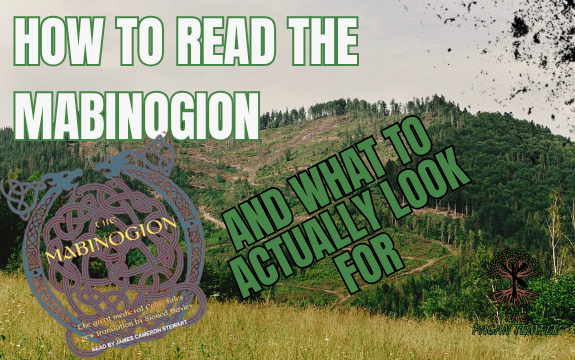
The primary Welsh source is the Mabinogion, a collection of medieval Welsh tales that preserves mythological material of considerable age. The Four Branches of the Mabinogi are the core texts, featuring figures like:
- Rhiannon, a sovereignty goddess connected to horses and the otherworld
- Pwyll, a mortal lord who navigates relationships with the divine
- Arawn, lord of Annwn, the Welsh otherworld
- Math, a powerful enchanter and lord
- Lleu Llaw Gyffes, a figure with strong parallels to the Irish Lugh
Arthurian legend has Brythonic roots as well, though it's been so layered over with medieval Christian and courtly romance material that working back to any original religious content requires serious care.
Cornish and Manx traditions are smaller and more fragmentary, but dedicated practitioners work to reconstruct them from surviving language, folklore, and archaeology.
Continental and Celtiberian Traditions
Beyond Gaul, Celtic-speaking peoples existed across parts of the Iberian Peninsula (Celtiberians) and in Central Europe (La Tène culture). These traditions are even more fragmented and less worked over by modern reconstructionists, but they represent a genuine part of the Celtic world that serious practitioners acknowledge.
Celtiberian paganism, sometimes called Celtiberian reconstructionism, draws on archaeological finds and Latin inscriptions from the Iberian Peninsula to engage with this distinct branch of Celtic religion.
Core Beliefs and Themes Across Celtic Traditions
While each branch has its own character, there are recurring themes and concepts that appear broadly across Celtic religious traditions.
Polytheism
Celtic religion is polytheistic. There are many gods, and they are understood as real, distinct, and individual. They are not all aspects of a single divine force. The modern tendency to collapse all Celtic goddesses into one "the Goddess" is not historically grounded and flattens important distinctions between genuinely different beings.
Animism and the Sacred Landscape
The natural world is alive with presence in Celtic religious thought. Rivers, wells, mountains, trees, and places hold spiritual significance and are often associated with specific deities or spirits. Sacred springs were especially important, as sites of healing, votive offering, and connection to the otherworld.
This isn't abstract metaphor. The Celts named rivers after goddesses. They dropped weapons, jewelry, and sometimes bodies into bodies of water as offerings. The land wasn't a backdrop for human activity. It was a participant.
The Otherworld
Almost every Celtic tradition has some concept of an otherworld, a realm adjacent to or interpenetrating the mortal world. In Irish tradition it includes Tír na nÓg and the Sídhe. In Welsh tradition it is Annwn. In Gaulish thought, the Romans noted that the Celts had little fear of death partly because of strong beliefs in the continuation of life in another realm.
The otherworld isn't just an afterlife destination. It's an active force that intersects with the mortal world, especially at liminal times and places.
Reciprocity and Hospitality
Celtic ethics, as far as we can reconstruct them, were built around relationships, obligations, and reciprocity. The relationship between mortals and gods wasn't one of supplication and mercy. It was a relationship of mutual obligation. You honored the gods. The gods honored that relationship. Hospitality (Irish: flaithiúlacht) was a serious virtue and social obligation, not just a nice-to-have.
Ancestors and the Dead
Veneration of ancestors is woven through Celtic traditions. The dead are not simply gone. They remain part of the community, accessible at certain times (Samhain being the most famous threshold), and deserving of honor and remembrance.
The Celtic Seasonal Calendar
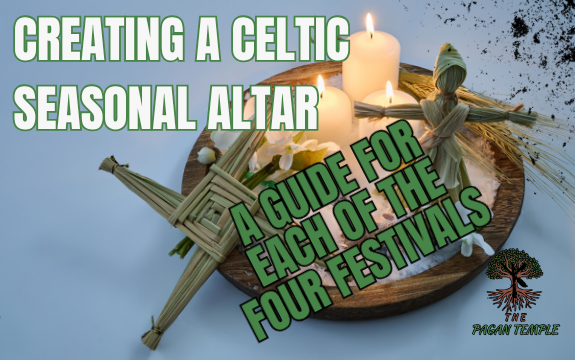
The Celtic peoples observed a seasonal calendar rooted in pastoral life, agriculture, and the movement of the sun. Four major festivals mark the year, sitting roughly between the solstices and equinoxes.
Samhain (roughly November 1) — The end of the harvest season and the beginning of the dark half of the year. The boundary between the living and the dead is thinnest here. Ancestors are honored and propitiated.
Imbolc (roughly February 1) — Associated strongly with the goddess Brigid in Irish tradition. A festival of early spring, renewal, and the first signs of life returning to the land. Sacred flames and wells play a significant role.
Beltane (roughly May 1) — A festival of fire, fertility, and the beginning of summer. Cattle were driven between bonfires for purification. A time of vitality, abundance, and liminality between the mortal world and the otherworld.
Lughnasadh (roughly August 1) — The beginning of harvest, associated with the god Lugh in Irish tradition. Games, assemblies, and first fruits offerings mark the season.
These four festivals form the backbone of a Celtic year, though local and regional variation in observance was certainly common in antiquity.
Druidry and Its Place in Celtic Paganism
No discussion of Celtic paganism is complete without addressing the Druids. They tend to attract a lot of myth and fantasy projection.
The Druids were a priestly class within Celtic societies, responsible for religious ritual, law, history, divination, and the transmission of knowledge. Classical sources describe a lengthy training period, an oral tradition, and significant social authority.
What we don't have is a clear picture of their actual teachings. The Druids maintained an oral tradition deliberately. Nothing was written down. What the Romans said about them was filtered through political and cultural bias.
Modern Druidry, as practiced by organizations like OBOD (Order of Bards, Ovates and Druids) or ADF (Ár nDraíocht Féin), is a contemporary spiritual path inspired by the ancient Druids but not a direct continuation of them. That's not a critique. It's an honest description. Many Druidic practitioners are thoughtful, serious people doing meaningful spiritual work. The key is being honest about what is reconstructed versus what is documented.
Some people identify specifically as Druids within a Celtic pagan practice. Others practice Celtic polytheism without any Druidic framing at all. Both are valid positions.
Celtic Paganism and Modern Practice
Practicing Celtic paganism today means working with incomplete sources, ongoing scholarly debate, and a living tradition that is being rebuilt in real time by real people.
A few things worth knowing as you find your footing:
Choose your branch. Celtic paganism is not one thing. Irish, Welsh, Gaulish, and Scottish Gaelic traditions each have their own deities, myths, and practices. Starting with a specific cultural tradition rather than a vague "Celtic" melting pot will give your practice more coherence and depth.
Read the primary sources. The Irish texts, the Mabinogion, the Gaulish inscriptions, the archaeological record. These are the foundation. Modern books about Celtic spirituality vary wildly in quality. The ones grounded in primary source engagement are worth far more than the ones that aren't.
Engage with your landscape. Celtic religion was rooted in place. Whatever Celtic tradition you're drawn to, the animist thread running through all of it points toward the land where you actually live. Engaging with local waters, trees, and land spirits alongside your chosen tradition deepens practice in ways that purely intellectual study doesn't.
Be honest about what we don't know. There's a temptation in any reconstructionist path to fill gaps with imagination and call it tradition. Some creative reconstruction is necessary and legitimate. But being clear about what's documented, what's inferred, and what's invented keeps your practice honest and keeps the broader community honest too.
Where to Go From Here
Celtic paganism is a deep well. Whether you're drawn to the rich mythology of Ireland, the atmospheric Welsh otherworld, the archaeological puzzle of Gaul, or the folklore-soaked landscape of Scotland, there is a lifetime of learning and practice available to you.
The Pagan Temple is built to be a resource for exactly this kind of serious, grounded exploration. If you want to go deeper on any of the branches or topics covered here, use the links below to keep going.
- Getting Started with Celtic Paganism, A Beginner's Guide
- Sacred Spaces: Altars, Shrines, Temples, and Groves
- Community
- Specific Paths:
Sources and Further Reading