
Before You Begin
This resource is designed for practitioners who have foundational knowledge of at least one pagan tradition and understand basic concepts like archetypes, deity work, and mythological symbolism. If you are completely new to paganism or mythology, we recommend starting with our
Introduction to Pagan Mythology and Understanding Deity Archetypes resources first.
Prerequisites:
- Basic understanding of what archetypes are and how they function in mythology
- Familiarity with at least one pagan tradition's mythology
- Comfort with comparative mythology (examining stories across cultures)
- Understanding that deities are more than archetypes to those who worship them
What You Will Learn:
- The defining characteristics of the Trickster archetype and its psychological function
- How Trickster figures manifest across Norse, Greek, Egyptian, Celtic, and Slavic traditions
- The cultural and theological significance of chaos within ordered cosmologies
- How to engage with Trickster energy in your own spiritual practice thoughtfully and safely
Foundation Recap: Understanding Archetypes
Before we explore the Trickster in depth, let us briefly review what we mean by archetype. In the context of mythology and spirituality, an archetype is a universal pattern or motif that appears across human cultures throughout history. The psychologist Carl Jung popularized this term, describing archetypes as inherited patterns in the collective unconscious that shape human experience and storytelling.
When we discuss the Trickster archetype, we are identifying a pattern that recurs across cultures. However, we must be careful here. While Loki, Hermes, and other Trickster figures share certain characteristics, they are not the same being wearing different masks. Each deity exists within their own cultural context with unique attributes, relationships, and worship practices. The archetype helps us understand patterns; it does not reduce distinct deities to interchangeable figures.
Key Takeaway: Archetypes reveal patterns across cultures. They do not suggest that different deities are the same entity or interchangeable in worship.
The Trickster Archetype: Defining Characteristics
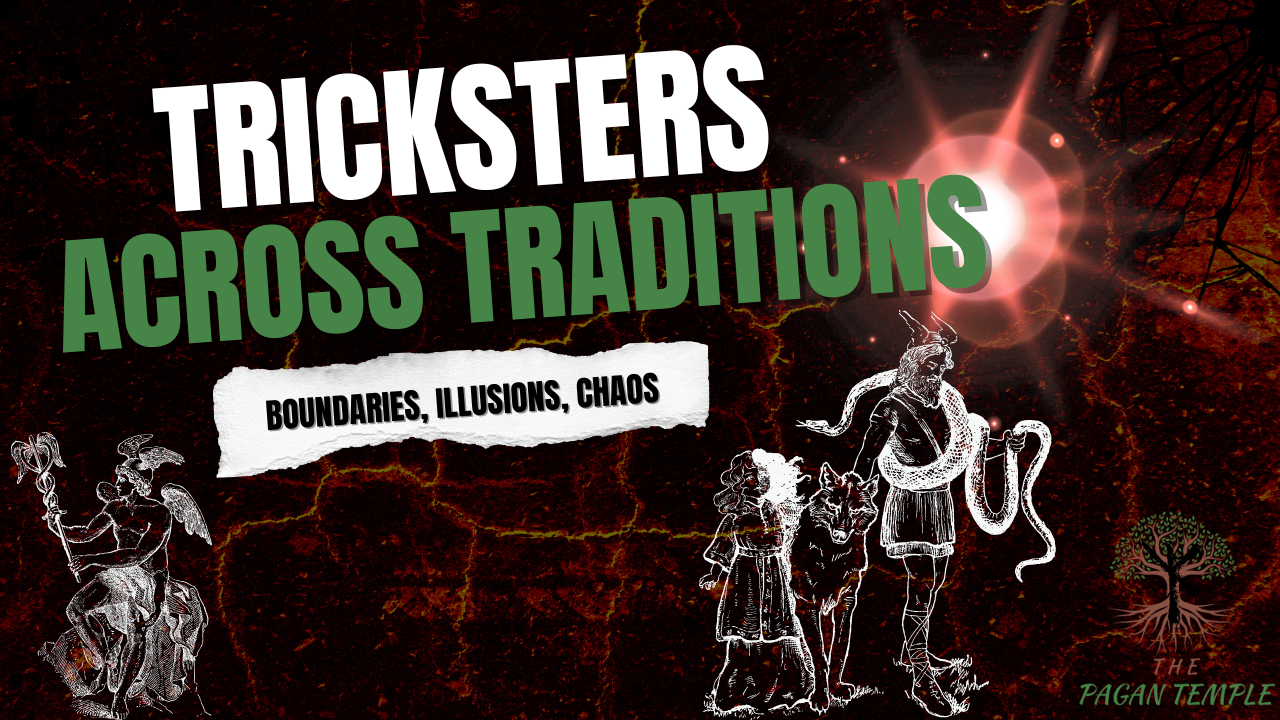
The Trickster is one of the most complex and paradoxical archetypes in world mythology. Unlike the Hero, the Mother, or the Sage, the Trickster resists easy categorization. This resistance to definition is itself a core trait of the archetype.
Core Characteristics
Across cultures, Trickster figures tend to share several defining features. Understanding these helps us recognize the archetype while still honoring each deity's unique nature.
Boundary Crossing: Tricksters move between worlds, states, and categories that are normally kept separate. They cross the boundaries between the sacred and profane, the living and dead, the divine and mortal. This ability to move where others cannot makes them essential messengers, guides, and agents of change.
Shapeshifting: Most Trickster figures possess the ability to change their form. This shapeshifting represents their fundamental fluidity and refusal to be pinned down. They may become animals, change gender, or take on disguises to achieve their goals.
Cunning Over Strength: Where warriors rely on physical power, Tricksters succeed through wit, deception, and clever manipulation. They often triumph over stronger opponents through guile rather than force.
Appetite and Excess: Tricksters frequently display uncontrolled appetites, whether for food, sex, or other pleasures. This excess often leads them into trouble, but it also represents the life force in its rawest form.
Culture-Bringer: Paradoxically, many Tricksters are credited with bringing essential gifts to humanity. Fire, writing, medicine, and other cultural foundations often come through Trickster figures, frequently obtained through theft or deception from other gods.
Moral Ambiguity: Tricksters are neither good nor evil. Their actions may help or harm, and often do both simultaneously. They expose the limitations of rigid moral categories.
The Psychological and Spiritual Function
Why do so many cultures have Trickster figures? What function do they serve in mythology and the human psyche?
Tricksters represent the necessary chaos within order. Every culture creates rules, hierarchies, and structures to organize society. But rigidity becomes stagnation. The Trickster introduces the unpredictable element that prevents systems from calcifying. Through their disruption, Tricksters paradoxically support the long-term health of the order they seem to threaten.
On a personal level, the Trickster represents the parts of ourselves that resist conformity, question authority, and recognize the absurdity inherent in existence. Working with Trickster energy can help us develop flexibility, creativity, and the ability to find unexpected solutions to problems.
Important Note: In many traditions, Trickster deities are approached with caution and respect. Their unpredictable nature means that offerings and invocations should be made thoughtfully, with clear boundaries and intentions.
Tricksters Across Traditions
Now let us examine how the Trickster archetype manifests in specific traditions. We will explore the unique characteristics of each figure while noting the patterns that connect them.
Norse Tradition: Loki
Pronunciation: LOH-kee
Primary Sources: The Prose Edda (Snorri Sturluson), The Poetic Edda, various sagas
Loki is perhaps the most complex and controversial Trickster figure in pagan traditions. He is a Jötunn (often translated as "giant") who became a blood-brother of Odin and lives among the Æsir. His role in Norse mythology shifts dramatically from helpful companion to cosmic antagonist.
Boundary Crossing: Loki moves freely between Jötunheimr (the realm of the Jötnar) and Ásgarðr (home of the Æsir). He is neither fully god nor fully giant, existing in a liminal space between categories. This boundary position gives him access and insight that others lack.
Shapeshifting: Loki is the most prolific shapeshifter in Norse mythology. He becomes a mare (giving birth to Sleipnir, Odin's eight-legged horse), a salmon, a fly, and various other forms. His gender fluidity is notable; he is both father and mother to different offspring.
Culture-Bringer and Trouble-Maker: Many of the treasures of the Æsir come to them through Loki's schemes. Mjölnir, Gungnir, and Draupnir were all obtained because of situations Loki created, usually by causing a problem first and then solving it. He both creates the crisis and provides the solution.
Moral Complexity: Loki's actions range from harmless mischief to profound tragedy. His role in the death of Baldr marks a turning point where his transgressions become unforgivable to the Æsir. By Ragnarök, he leads the forces against the gods he once called family.
Key Takeaway: Loki represents the necessary chaos within the Norse cosmos. His presence reminds us that even the divine order contains the seeds of its own transformation.
Greek Tradition: Hermes
Pronunciation: HER-meez
Primary Sources: Homeric Hymn to Hermes, various works by Hesiod, Ovid, and other classical authors
Hermes is the Greek god of boundaries, travelers, merchants, thieves, and messengers. Among the Olympians, he serves as the divine herald and guide of souls (psychopomp). His Trickster nature is evident from birth.
The Cattle Theft: According to the Homeric Hymn, Hermes stole Apollo's cattle on the very day he was born. When confronted, the infant Hermes lied convincingly to Zeus himself. Rather than punishing him, Zeus was amused, and the theft ultimately led to Hermes gifting Apollo the lyre he had invented, establishing a bond between the two gods.
Boundary Crossing: As god of boundaries (including the boundary between life and death), Hermes can travel freely between Olympus, the mortal world, and the Underworld. He guides souls to the afterlife and serves as messenger between realms.
Culture-Bringer: Hermes invented the lyre, fire-sticks for kindling fire, and is credited with creating the alphabet in some traditions. He teaches mortals wrestling and other skills. His cleverness benefits humanity directly.
Patron of Outsiders: Hermes protects those who exist on society's margins: travelers, merchants, thieves, and those who move between social categories. His herms (stone pillars) marked boundaries and crossroads, liminal spaces between territories.
Unlike Loki, Hermes maintains positive relationships with the other Olympians. His Trickster nature is channeled into his divine functions rather than leading to cosmic conflict. This represents a more integrated Trickster, whose disruptive energy serves the divine order.
Egyptian Tradition: Set
Pronunciation: SET (also spelled Seth, Sutekh)
Primary Sources: Pyramid Texts, Coffin Texts, The Contendings of Horus and Set, various temple inscriptions
Set presents an interesting case for the Trickster archetype. He is the Egyptian god of chaos, storms, the desert, and foreigners. His relationship with the other gods is complex and changed significantly over the millennia of Egyptian religion.
The Murder of Osiris: Set is famous for killing his brother Osiris and dismembering his body. This act of violence might seem to disqualify him from the Trickster category, but his methods were cunning rather than direct combat. He tricked Osiris into a chest that became his coffin.
Necessary Chaos: Despite his destructive actions, Set plays an essential role in the Egyptian cosmos. He stands at the prow of Ra's solar barque, defending the sun god against the serpent Apophis each night. His chaotic nature becomes a weapon against the greater chaos that threatens cosmic order.
Shapeshifting and Sexual Ambiguity: In The Contendings of Horus and Set, both gods engage in shapeshifting and sexual trickery. The competition between them includes episodes of gender fluidity and sexual ambiguity that are hallmarks of Trickster narratives.
Changing Status: Set's reputation shifted dramatically over time. In early periods, he was a powerful protective deity. Later, especially during foreign domination of Egypt, he became increasingly demonized. His Trickster nature remained constant, but cultural attitudes toward that nature changed.
Celtic Tradition: Gwydion
Pronunciation: GWID-ee-on
Primary Sources: The Fourth Branch of the Mabinogi (Medieval Welsh literature)
Gwydion fab Dôn is a magician and Trickster figure from Welsh mythology. He appears primarily in the Fourth Branch of the Mabinogi, where his cunning and magical abilities drive much of the narrative.
Master of Illusion: Gwydion's primary Trickster attribute is his mastery of illusion magic. He creates elaborate deceptions that fool both mortals and other magical beings. His illusions are so powerful that they temporarily reshape reality itself.
The Theft of the Pigs: In a classic Trickster narrative, Gwydion schemes to steal magical pigs from Pryderi, Lord of Dyfed. He creates elaborate illusions, disguising himself and his companions as bards, and exchanges illusory horses and hounds for the pigs. When dawn breaks and the illusions fade, war ensues.
Moral Complexity: Gwydion's trickery causes significant harm, including war and death. Yet he is not portrayed as evil. His actions set in motion events that ultimately benefit his family and kingdom. Like many Tricksters, his morality cannot be easily categorized.
Transformation as Punishment: Interestingly, Gwydion himself is subjected to transformation magic as punishment. He and his brother Gilfaethwy are transformed into various animal pairs by Math. This reversal, where the shapeshifter is himself shifted, adds depth to his Trickster nature.
Slavic Tradition: Veles
Pronunciation: VEH-les (also Volos)
Primary Sources: Primary Chronicle, various treaties, folklore, and reconstructed mythology
Veles is a major Slavic deity associated with the underworld, water, cattle, magic, and trickery. He stands in eternal opposition to the thunder god Perun, representing the chthonic (underworld) forces against the celestial.
The Cosmic Conflict: In reconstructed Slavic mythology, Veles and Perun engage in an eternal battle. Veles, in serpent form, steals cattle or Perun's wife or son, hiding them in the underworld. Perun pursues with lightning and thunder. This conflict is understood as necessary, driving the cycles of seasons and rain.
Shapeshifting: Veles frequently appears as a serpent or dragon, but can take many forms including a bear or an old man. His fluid form reflects his connection to water and his Trickster nature.
God of Magic and Oaths: Despite his Trickster aspects, Veles was invoked to witness oaths and treaties. The 10th-century treaties between the Rus and Byzantium invoke Veles alongside Perun. This dual nature, both trickster and oath-keeper, shows the complexity of his character.
Liminal Spaces: Veles rules over liminal spaces and times: crossroads, midnight, the transitions between seasons. Shepherds, musicians, and those who work with the unseen world were under his protection.
Common Themes and Patterns
Having examined Trickster figures across five traditions, we can now identify the patterns that connect them while respecting their differences.
Shared Characteristics
Liminality: All Tricksters exist in liminal (threshold) spaces. They move between worlds, categories, and states. This liminality gives them power but also marks them as outsiders, never fully belonging to any single realm.
Necessary Opposition: Each Trickster stands in tension with the established order, yet their opposition is necessary for the cosmos to function. Without Loki, the Æsir would have none of their treasures. Without Set, Apophis would devour the sun. Without Veles, there would be no rain.
Transformation: Shapeshifting and transformation are universal Trickster traits. This reflects their essential nature: they are change itself, the force that prevents stagnation.
Gifts Through Transgression: Cultural advances often come through Trickster theft or deception. Fire, writing, divine tools, and other gifts reach humanity through Trickster action. What appears as theft from the gods becomes a gift to mortals.
Important Differences
While patterns exist, we must not flatten these differences. Each Trickster exists within a specific cultural context that shapes their meaning.
Relationship to Divine Order: Hermes is fully integrated into the Olympian order, serving as Zeus's herald. Loki's relationship with the Æsir deteriorates from companion to enemy. These different trajectories reflect different cultural attitudes toward chaos and transgression.
Worship and Veneration: How these deities were worshipped differs significantly. Hermes had widespread public cult. Loki appears to have received little to no formal worship in the Viking Age. Veles was invoked in oaths. These differences matter for modern practitioners.
Cultural Context: Each culture developed their Trickster to address their specific needs and worldview. The Trickster in an honor-based warrior culture (Norse) functions differently than in a Mediterranean mercantile culture (Greek) or an agricultural society dependent on river cycles (Egyptian).
Key Takeaway: The Trickster archetype helps us recognize patterns. Understanding the specific cultural context helps us engage respectfully with individual deities.
Putting This Into Practice
Understanding the Trickster archetype offers insights for spiritual practice and personal development. Here are some ways to work with this knowledge.
For Comparative Study
- Read Primary Sources: Before forming opinions about any Trickster deity, read the original myths. The Homeric Hymn to Hermes, the Prose Edda's accounts of Loki, and the Mabinogi's stories of Gwydion are all accessible in translation. Secondary sources and popular media often distort these figures.
- Study Cultural Context: Learn about the society that produced each myth. Understanding Norse concepts of honor and shame, Greek ideas about xenia (guest-friendship), or Egyptian concepts of Ma'at (cosmic order) illuminates why their Tricksters behave as they do.
- Compare Thoughtfully: When comparing figures, look for both similarities and differences. Ask what the differences tell you about each culture. Resist the urge to collapse distinct deities into a single "Trickster god."
For Deity Work
If you feel called to work with a Trickster deity, approach with respect and appropriate caution.
- Research Extensively: Before initiating contact, study the deity thoroughly within their own tradition. Learn their associations, historical worship practices, and relationships with other deities.
- Set Clear Boundaries: Trickster energy can be destabilizing. Be clear about what you are and are not inviting. Protective practices and grounding are especially important when working with these forces.
- Expect the Unexpected: Tricksters do not conform to expectations. They may teach through disruption, humor, or uncomfortable revelations. Maintain flexibility and a sense of humor.
- Respect Their Complexity: Do not approach a Trickster deity expecting only fun and mischief. Their myths include serious consequences. They demand honesty, often exposing our self-deceptions.
For Personal Development
Even without formal deity work, Trickster wisdom can enrich your spiritual practice.
- Embrace Liminality: Life transitions (career changes, relationship shifts, spiritual growth) are liminal spaces where Trickster wisdom applies. Instead of rushing through these thresholds, learn to dwell there and see what possibilities emerge.
- Question Rigidity: When you find yourself clinging to rules, expectations, or identities, ask what the Trickster might reveal. Sometimes our most cherished certainties need disruption.
- Find Wisdom in Humor: Tricksters often operate through humor. The ability to laugh at ourselves and find absurdity in serious matters is a spiritual skill. Take your practice seriously without taking yourself too seriously.
- Accept Shadow Work: Tricksters often embody what we would rather not see about ourselves. Working with Trickster themes can be a form of shadow work, integrating aspects of ourselves we have denied or repressed.
Common Challenges and Questions
As you explore the Trickster archetype, you may encounter some common difficulties. Here are some questions practitioners frequently ask, along with thoughtful responses.
"Are all Trickster deities the same being in different forms?"
No. The archetype reveals a pattern in human storytelling and spiritual experience, but Loki, Hermes, and Set are distinct beings within their respective traditions. Treating them as interchangeable disrespects both the deities and the cultures that developed these traditions. A devotee of Hermes would not substitute Loki in their practice, and vice versa.
"Should I be afraid to work with Trickster deities?"
Not afraid, but appropriately cautious and respectful. Trickster deities are not evil, but they are unpredictable. They may push boundaries, challenge assumptions, and create disruption. Some practitioners find this exactly what they need; others find it too destabilizing. Know yourself, do your research, and approach with appropriate preparation.
"Is Loki evil?"
This is one of the most debated questions in contemporary Norse paganism. The sources show Loki as a complex figure who helps and harms the gods at different times. His role in Baldr's death and Ragnarök position him as an antagonist, but "evil" may be too simple a category. Many practitioners today see him as embodying necessary chaos rather than malevolence. This remains a matter of individual interpretation and theological perspective.
"What if I am drawn to a Trickster deity but my tradition does not include one?"
First, look more carefully at your tradition. Trickster figures can be subtle, and you may find Trickster qualities in unexpected places. If your tradition genuinely lacks a Trickster figure, consider whether you might be called to expand your practice or whether you are seeking Trickster energy rather than a specific deity relationship. Trickster wisdom can be accessed through practices and perspectives without formal deity work.
"How do I know if a Trickster deity is reaching out to me?"
Common signs include repeated encounters with their symbols or stories, increased synchronicities, disruption of comfortable routines, unexpected humor in spiritual contexts, and dreams or visions featuring them. However, confirmation bias is real. Before concluding that a deity is calling you, study their tradition thoroughly, seek divination or consultation with experienced practitioners, and be honest about whether your interest stems from genuine calling or from popular media portrayals.
Resources for Deeper Learning
Recommended Reading
For General Trickster Studies:
- Trickster Makes This World by Lewis Hyde: An excellent cross-cultural analysis of the Trickster archetype and its role in art and culture.
- The Trickster: A Study in American Indian Mythology by Paul Radin: A foundational academic text, though dated in some of its anthropological assumptions.
For Tradition-Specific Study:
- Norse: The Prose Edda (Snorri Sturluson, trans. Jesse Byock); The Poetic Edda(trans. Carolyne Larrington)
- Greek: The Homeric Hymns (trans. Jules Cashford); Hermes the Thiefby Norman O. Brown
- Egyptian: The Complete Gods and Goddesses of Ancient Egyptby Richard Wilkinson
- Celtic: The Mabinogi (trans. Sioned Davies)
- Slavic: Slavic Paganism
Related Resources from The Pagan Temple
Continue Building Your Knowledge:
- Getting Started with Norse Paganism (Foundational)
- Introduction to Hellenism (Foundational)
- Understanding Deity Archetypes (Foundational)
- Building a Relationship with Deity (Development)
- Shadow Work for Pagans (Development)
Join the Discussion
Share your experiences and learn from others in The Grove, our Discord community.
Current Discussion Topic: How has Trickster energy appeared in your spiritual journey? Have you worked with any Trickster deities, or found Trickster wisdom through other means? What challenges have you encountered?
Support Free Pagan Education
All of our educational content is freely available to everyone, always. If this lesson helped deepen your understanding of the Trickster archetype and its manifestations across cultures, consider supporting our mission in one of these ways:
- Share this resource with fellow practitioners and seekers who might benefit
- Join Temple Guardians ($17/month) to support our educational mission and receive community perks
- Leave your thoughts in our Discord community or in the video comments
- Subscribe to our YouTube channel for more in-depth educational content