
Why This Distinction Actually Matters
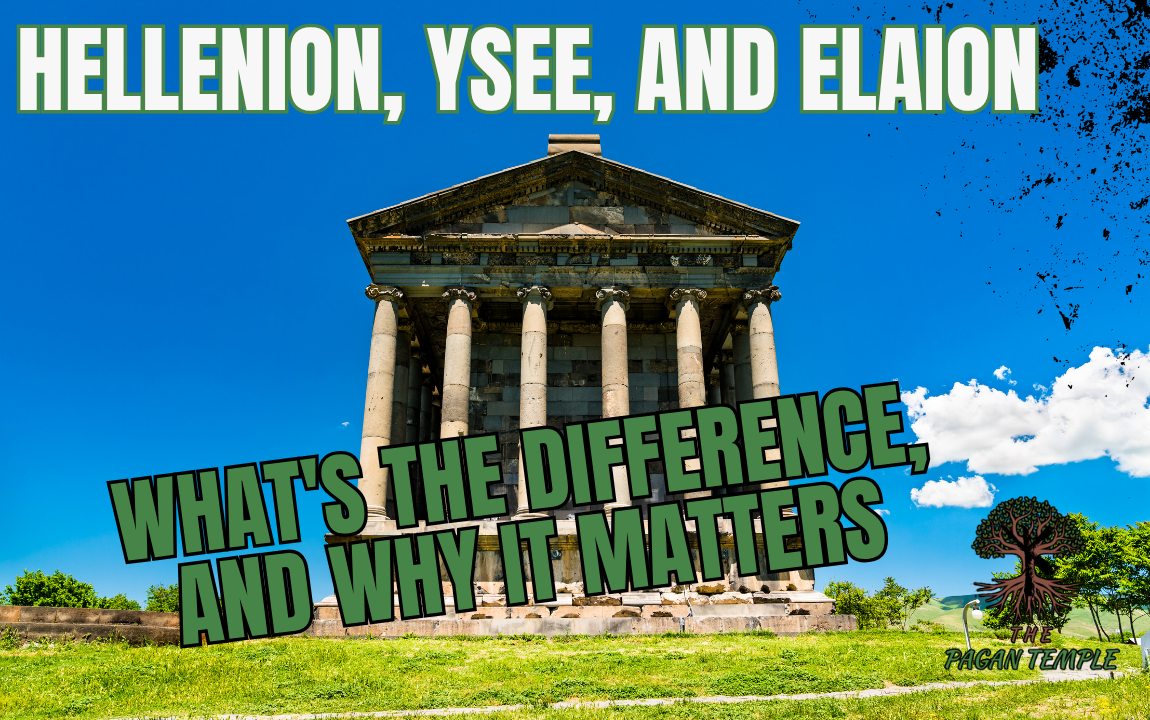
New practitioners sometimes assume there is one central modern Hellenic organization everyone belongs to, the way some other religions have a single dominant denomination or governing body in a given country. Modern Hellenismos does not work that way. Several distinct organizations exist, with real differences in geography, emphasis, and approach, and understanding those differences helps you figure out which resources and community actually fit what you are looking for.
Hellenion
Hellenion, based in the United States, explicitly identifies as a reconstructionist religious organization, structured formally enough to have achieved nonprofit religious organization status. Hellenion draws a clear, explicit line against Wiccan-style eclectic blending, emphasizing historical precedent and documented practice over eclectic modern adaptation, while still acknowledging space for personal spiritual experience alongside that historical grounding. The organization ordains dedicated priests, called Theoroi, each dedicated to a specific deity, and offers structured religious education and local congregation support for members. Hellenion maintains a published festival calendar and has produced substantial written material explaining its specific approach to reconstructionism.
YSEE (Supreme Council of Ethnikoi Hellenes)
YSEE operates in Greece itself and frames Hellenic religious revival in more explicitly national and cultural terms, connected to a broader movement reviving Hellenic religion as a living component of Greek cultural and national identity, sometimes positioned in direct contrast to Christianity's historical dominance in the region. This geographic and cultural context shapes YSEE's character in ways that differ meaningfully from Hellenion's more diaspora-oriented, individually focused American context. It is worth being direct that a small, vocal fringe connected to this broader Greek revival scene has used openly anti-Christian and occasionally extremist rhetoric, though this does not represent YSEE's mainstream position or the wider Greek Hellenic revival movement as a whole.
Elaion
Elaion, an international organization, uses the specific term Dodekatheism to describe its particular approach to Hellenic religion, centered on devotion to the twelve Olympian gods specifically. Elaion has historically run accessible online ritual participation programs, lowering the barrier to entry for practitioners without access to in-person local community, which has made it a particularly approachable starting point for newer or geographically isolated practitioners.
Labrys and the Neokoroi
Rounding out the landscape, Labrys and the Neokoroi represent smaller but active organizations and networks within the broader international reconstructionist community, each with their own particular emphasis and community structure, contributing to a genuinely plural rather than centralized modern Hellenic landscape.
What Unites Them Despite the Differences
Despite real differences in geography, emphasis, and organizational structure, the serious reconstructionist organizations covered here share a basic shared methodology: building modern practice from primary historical sources, current academic scholarship, and personal religious experience, generally in that rough order of authority, while remaining honest about where ancient evidence runs out and modern reconstruction has to fill the gap.
How These Organizations Actually Differ in Day to Day Practice
Beyond the broad geographic and theological distinctions already covered, these organizations differ in concrete, practical ways worth knowing if you are deciding where to spend your attention. Hellenion's structure, with its ordained Theoroi and formal nonprofit status, supports more developed in-person congregation life in regions where it has an established local presence, along with structured religious education programming for members working toward deeper involvement. Elaion's accessible online ritual participation model, by contrast, prioritizes lowering the barrier to entry over building dense local congregation structures, making it a more natural fit for someone without geographic access to an established in-person group. YSEE's stronger connection to Greek national and cultural identity gives it a different practical character entirely, more bound up with Greek civic life and cultural politics than either Hellenion or Elaion are within their own respective contexts.
A Word on Online-Only Practitioners and Where They Fit
A genuinely large share of modern Hellenic practitioners worldwide practice primarily through online community and self-directed study, without close affiliation to any of these formal organizations at all. This is not a lesser or incomplete way to practice. Given how geographically scattered serious Hellenic practitioners actually are, online community and published resources from these organizations often function as the only practically available connection to wider Hellenic community for a given individual practitioner, and that is a completely legitimate way to engage with this tradition, not a consolation prize compared to in-person congregation life that may simply not be available where you live.
Why None of This Requires You to Formally Join Anything
None of these organizations require formal membership before you can practice Hellenismos seriously and legitimately. Plenty of practitioners engage with published resources, calendars, and educational material from one or several of these groups, while practicing primarily as individuals or within small informal local or online groups. Understanding the landscape helps you know whose published material and approach you are actually drawing from when you read something online, which matters for understanding what assumptions and emphases shaped that material.
If you are still deciding whether to engage more formally with any of these organizations, a reasonable approach is starting by simply reading published material from each, their stated approach to reconstructionism, their festival calendars, their epithet and prayer resources, before deciding whether closer involvement appeals to you. None of these organizations are positioning themselves in competition with each other in a way that requires you to pick a single loyalty early on. Reading widely across all of them, at least at first, will likely give you a more complete and more honest picture of the genuine diversity within modern Hellenismos than committing to just one would.