
An Uncomfortable Topic Worth Addressing Directly
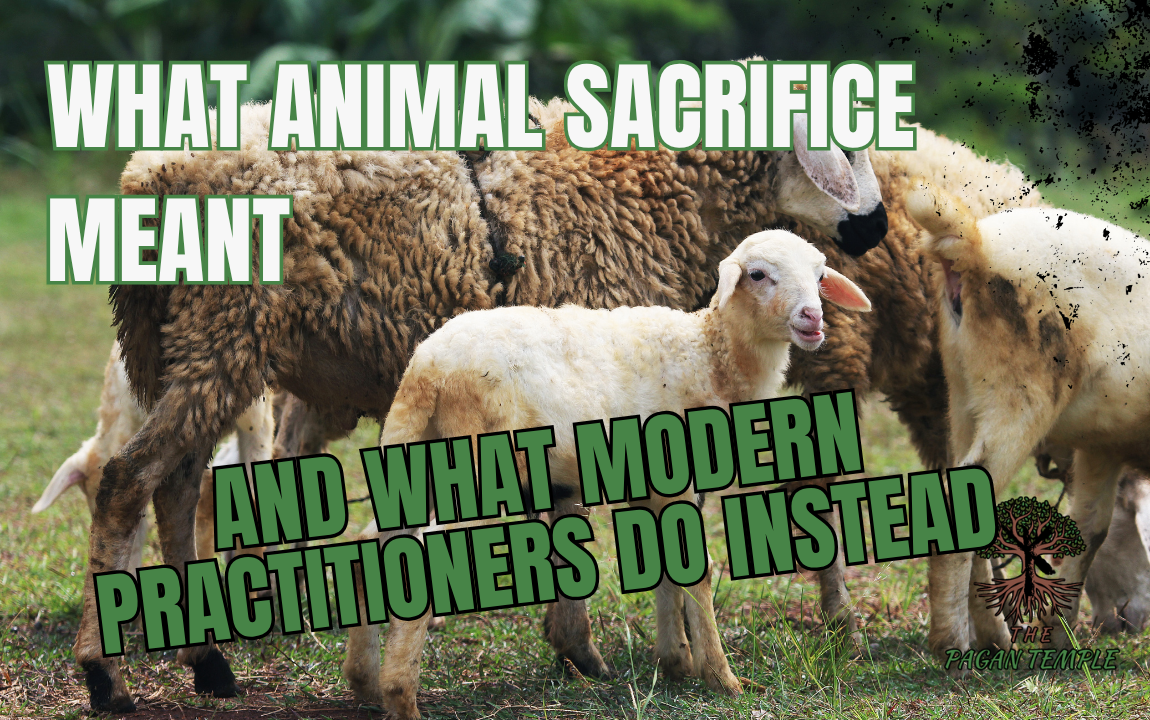
Animal sacrifice was central to ancient Greek civic religious practice, full stop. Pretending otherwise to make the tradition feel more palatable to modern sensibilities would be dishonest, and dishonesty about uncomfortable history is exactly the kind of surface-level approach this content tries to avoid. So let's talk about what it actually was, why almost no modern Hellenist practices it today, and what reasonably stands in for it now.
What Ancient Sacrifice Actually Involved
Greek animal sacrifice, as documented through literary sources, inscriptions, and archaeological remains, typically involved a structured public ritual at a civic altar. Specific portions of the animal, often bones and fat, were burned as the god's share, with the smoke understood as carrying the offering upward. The meat itself was then often cooked and shared communally among the participants, meaning sacrifice functioned simultaneously as religious offering and as a major source of community feasting and shared meat consumption in a world where meat was not an everyday dietary staple for most people.
This combination of religious obligation and practical communal nutrition mattered. Sacrifice was not solely a solemn, mournful act. It was frequently a significant, even celebratory community event tied to major festivals.
Why This Practice Largely Did Not Continue Into Modern Reconstructionism
A few practical and ethical realities explain why almost no modern Hellenic organization practices literal animal sacrifice. Most modern practitioners do not have access to the civic infrastructure, trained ritual specialists, or legal and practical framework that made ancient sacrifice function as a structured, regulated public institution rather than informal slaughter. Most modern Western societies also have different legal frameworks and different cultural and ethical relationships to animal slaughter than ancient Mediterranean society did.
Worth being direct here: this is one of the clearest places where reconstructionism explicitly chooses adaptation over literal recreation, and the mainstream modern community, including organizations like Hellenion, is generally upfront about this choice rather than treating it as a controversial secret.
What Modern Practitioners Actually Do Instead
Liquid libation has become the most common modern substitute, pouring water, wine, milk, or juice as an offering, which is itself a well documented ancient practice that existed alongside animal sacrifice rather than being a modern invention from scratch. Libation alone, even without animal sacrifice, has solid ancient precedent as a standalone offering.
Burned offerings of incense, herbs, or grain serve a similar symbolic function to the burned portion of ancient sacrifice, with smoke carrying the offering upward, without requiring animal slaughter.
Food offerings, particularly of bread, fruit, honey, or other items with documented ancient precedent as offerings, allow for a version of the "shared meal" element of ancient sacrifice. Some practitioners prepare a small meal, set aside a portion symbolically for the god, and then consume the rest themselves, echoing the ancient pattern of religious offering doubling as communal nourishment.
A small number of practitioners who already raise or ethically source meat for their own table choose to dedicate a portion of an animal they were already going to eat to a specific god as a modern, ethically adapted gesture toward the ancient practice, without slaughtering an animal specifically and solely for ritual purposes. This remains a minority practice and a personal choice, not a community standard.
Olympian Sacrifice and Chthonic Sacrifice Were Not the Same Ritual
It is worth being precise here, because the popular image of "Greek animal sacrifice" usually only captures half of what actually happened. The form described above, called thysia, was the standard procedure for Olympian gods. The god's portion burned and rose as smoke, the rest of the meat was shared among the human participants, and the overall tone was communal and often festive.
Chthonic deities and the dead were treated differently. A holocaust, from the Greek holokautoma, meaning "wholly burnt," involved burning the entire animal with nothing held back for human consumption. These offerings were often directed downward rather than upward, sometimes poured or burned into a pit called a bothros rather than on a raised altar, reflecting the underworld orientation of the recipient. There was no shared meal, no festive meat distribution, and a notably different emotional register, closer to placation or honor for the dead than to communal celebration.
This distinction matters because conflating the two flattens a meaningful piece of ancient theology. Hellenic religious practice did not treat all divine recipients the same way, and the ritual form of an offering was itself a statement about the nature of the being receiving it. Modern practitioners working with chthonic deities or hero cult figures sometimes carry this distinction forward symbolically, choosing offerings that are fully given over and not shared back, such as pouring an entire libation into the earth rather than a partial pour, as a modern echo of the holocaust pattern.
What the Evidence Can and Cannot Tell Us
Most popular accounts of Greek sacrifice lean heavily on literary sources like Homer, which describe sacrifice in idealized, narratively useful terms. Homeric sacrifice scenes are dramatic and detailed, but they were composed as poetry, not as ritual manuals, and they reflect an heroic age setting rather than necessarily documenting standard practice in any specific historical period.
Epigraphic evidence tells a more procedural, less romantic story. Inscribed sacrificial calendars, such as the well known calendar from the Attic deme of Erchia, list specific animals, specific gods, specific locations, and specific costs in plain administrative language, the kind of record a city or deme actually needed to budget and schedule religious life. These inscriptions confirm that sacrifice was routine, regulated, and financially accounted for, which is a different picture than the dramatic one-off scenes in epic poetry suggest.
Archaeological bone deposits add a third layer, and an honest one, since burned bone assemblages at sanctuary sites sometimes show patterns, in terms of which bones were burned versus kept, that do not perfectly match what literary sources describe. Where the evidence disagrees, the responsible position is to say so rather than to quietly pick whichever source supports the cleanest narrative. None of these three evidence types, literary, epigraphic, and archaeological, gives a complete picture alone, and treating any single one as the full truth about ancient sacrifice oversells what we actually know.
Where Modern Practitioners Land on the Ethics
It is worth naming the obvious comparison most people make once they sit with this topic for a minute: how does choosing not to perform animal sacrifice square with the fact that most modern practitioners still eat meat sourced from industrial agriculture, a system many would consider far more ethically troubling, in terms of animal welfare, than a single regulated ritual slaughter shared communally among a city's residents. Different practitioners land in different places on this. Some take it as a prompt to think more carefully about how they source meat generally, treating the ancient practice's directness about where food comes from as a useful corrective to modern food's anonymity. Others separate the two questions entirely, treating ritual practice and everyday diet as governed by different considerations. There is no single community position on this, and that is fine. The point of bringing it up is intellectual honesty, not pushing a particular dietary conclusion.
A Word on Honesty in How You Talk About This
If you create content, teach, or talk publicly about Hellenismos, be direct that animal sacrifice was real, was central, and is not something most modern practitioners do. Softening or avoiding this topic to make the tradition seem more comfortable actually undersells how seriously ancient Greeks took religious obligation, and how meaningfully modern practitioners have had to adapt that obligation to a different world.