
The Story Itself
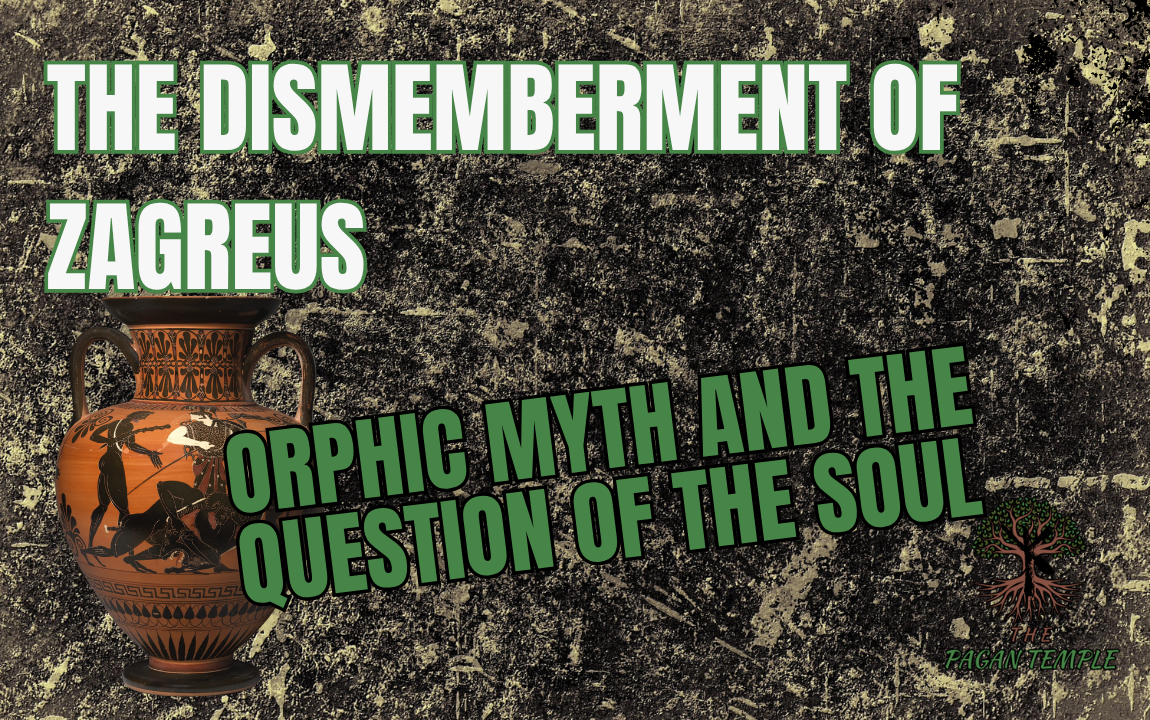
In one Orphic version of the myth, Zagreus is a son of Zeus, sometimes identified closely with or as a form of Dionysos, born from a union with Persephone. The jealous Titans lure the young god, distract him with toys, including a mirror, and tear him apart, devouring his flesh. Athena, or in some versions Rhea, manages to save his heart, and from it the god is eventually reborn, sometimes through Zeus consuming the heart and later fathering Dionysos again through Semele.
Zeus, in fury at the Titans' act, destroys them with lightning, and in some later philosophical retellings, humanity itself is said to have been formed from the ashes of the destroyed Titans, who had eaten the god's flesh. This detail is the one that gets the most attention, and also the one that requires the most caution.
Why That Last Detail Became So Controversial
Nineteenth and early twentieth century scholars, working in a cultural context saturated with Christian theological categories, looked at this myth and saw something that resembled original sin. Humanity, born from beings who had consumed a god's flesh, carrying an inherited stain from that act, in need of purification and salvation to escape a cycle of reincarnation. It is an appealing parallel, and it shaped how Orphism got described for decades, sometimes explicitly as an "Orphic Church" with proto-Christian doctrine.
The problem, as scholars like Radcliffe Edmonds have argued forcefully in more recent work, is that this entire "original sin" framing traces back overwhelmingly to a single source, the late Neoplatonist commentator Olympiodoros, who was making a specific, narrower philosophical point in his own context, not summarizing a widely held Orphic doctrine. Treating one late commentator's specific argument as proof of a coherent ancient Orphic theology of inherited guilt is, on this view, an overreach.
What the Myth Might Actually Be Doing
Set aside the original sin framing for a moment and look at the structural pattern instead: a god is violently dismembered, then reborn. This pattern connects clearly to broader ancient Mediterranean religious concerns with death, fragmentation, and renewal, themes that show up across multiple Mystery traditions, not just material labeled specifically Orphic.
The Orphic gold tablets, the small inscribed leaves placed with the dead and discovered starting in the 19th century, do reference the soul's fate after death and the possibility of escaping a cycle of rebirth, which connects thematically to the Zagreus story's death-and-rebirth structure. But the tablets themselves are short and formulaic. They do not spell out a complete connected theology explaining exactly how Zagreus's myth relates to an individual soul's specific afterlife journey. That connective tissue is largely scholarly reconstruction, reasonable in places, speculative in others.
Where the Maximalist and Minimalist Positions Actually Disagree
Scholars like Alberto Bernabé, representing what is sometimes called the maximalist position, argue there is enough consistent thematic and textual overlap across the gold tablets, the Zagreus myth, and other Orphic-attributed material to support treating Orphism as a real, identifiable religious current with a recognizable, if not perfectly uniform, core concern with the soul's fate and purification.
Edmonds and the more minimalist position argue the label "Orphic" was applied flexibly by ancient people to unusual or extra-ordinary religious material on a case by case basis, useful as a way of explaining strange practices or texts, without that label necessarily pointing back to one coherent religious movement with stable, shared doctrine.
Both sides are looking at substantially the same evidence and reaching different conclusions about how much coherence it actually supports. Neither side is dismissing the Zagreus myth itself as unimportant. They disagree about what kind of religious phenomenon it is evidence for.
The Connection to Plato, and Why It Complicates Things Further
Part of why this debate has real philosophical weight is that Plato himself references Orphic-associated ideas in several dialogues, including a wordplay connecting soma, the Greek word for body, to sema, meaning tomb or marker, suggesting the body as a kind of grave or prison for the soul. This idea, sometimes called the doctrine of the soul's imprisonment, clearly resonates with the death-and-rebirth structure of the Zagreus myth and with the gold tablets' concern with the soul's fate after death.
But Plato was a philosopher constructing his own argument, drawing selectively on material he found useful, not a neutral reporter cataloging Orphic belief for posterity. Scholars disagree about how much Plato's use of this idea reflects a real, preexisting Orphic theological position he was drawing on, versus how much he was adapting loosely associated religious imagery to serve his own distinct philosophical argument about the soul. This is the same maximalist-minimalist tension showing up again in a different ancient source, which is itself informative: the disagreement is not isolated to one type of evidence, it runs through nearly everything labeled Orphic.
A Note on the Name Itself
It is worth clarifying something that trips up a lot of readers: "Zagreus" is not a universally used name for this figure across all ancient sources discussing this myth. Some sources use Zagreus as a distinct name for this specific dismembered-and-reborn god, while others apply the story directly to Dionysos himself without using the name Zagreus at all, treating the dismemberment myth as simply an episode in Dionysos's own mythology rather than describing a separate, intermediate figure. Later sources, particularly from the Roman period onward, increasingly treat Zagreus and Dionysos as effectively identical or as two names for the same underlying mythic identity. This naming inconsistency is itself a small example of the broader pattern scholars argue about: material gets labeled and relabeled across centuries in ways that may reflect real ancient theological distinctions, or may simply reflect different authors using different conventions for the same general story.
Why Modern Practitioners Should Care About This Debate at All
It might seem like an academic argument with little bearing on actual devotional practice, but it shapes a real practical question: how much weight should you put on "Orphic" as a label for your own practice. If you tell people you follow an Orphic path, you are making an implicit claim about engaging with a coherent ancient religious tradition with identifiable beliefs about the soul and the afterlife. Understanding that serious scholars dispute exactly how coherent that tradition actually was means you can describe your own practice honestly, as engagement with specific Orphic-attributed material and themes, without overstating how settled the underlying historical picture is.
What This Means for Modern Engagement With the Myth
You can absolutely find the Zagreus myth meaningful and worth engaging with devotionally without needing to resolve this academic debate first. Plenty of modern practitioners connect with the death-and-rebirth structure of the story as a personal symbol for transformation, grief, and renewal, which is a legitimate devotional use of myth regardless of how the underlying historical scholarly question eventually settles, if it ever does.
What is worth avoiding is presenting the "humanity was born stained by the Titans' crime" version as straightforward, settled ancient Orphic doctrine, when it is better understood as a specific, debated, and likely overstated historical claim.