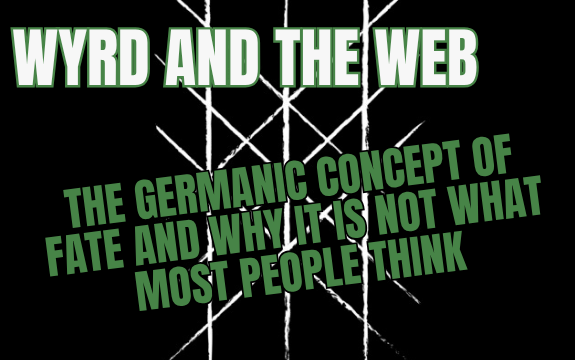

“Wyrd bith ful araed.” Fate is inexorable. That line comes from the Old English poem The Wanderer, and it is one of the most famous sentences in the entire Old English corpus. Scholars and practitioners quote it regularly. Most of them do not explain what it actually means, or what the Old English tradition understood fate to be. The result is that wyrd ends up sounding like simple determinism, a kind of cosmic inevitability in which nothing you do matters because everything is already decided.
That reading is wrong. The Germanic concept of fate is more interesting and more demanding than that. This post covers what wyrd meant in the Old English tradition, what the Norse sources say about its equivalent concept, and what that framework implies for how a person should actually live.
What Wyrd Is Not
Wyrd is not predestination in the Christian sense, the idea that God has determined every event before it happens and your choices are therefore irrelevant. It is not fatalism in the nihilist sense, the idea that nothing matters because everything is already determined. And it is not the modern popular understanding of fate as a benevolent force steering you toward your destined purpose.
These readings miss something essential about the Old English and Old Norse framings of fate. The word wyrd itself comes from the verb weorthan, to become or to happen. It is about what comes into being through the unfolding of events and choices, not about a predetermined script that plays out regardless of what anyone does. That distinction is crucial.
The Web of What Has Happened
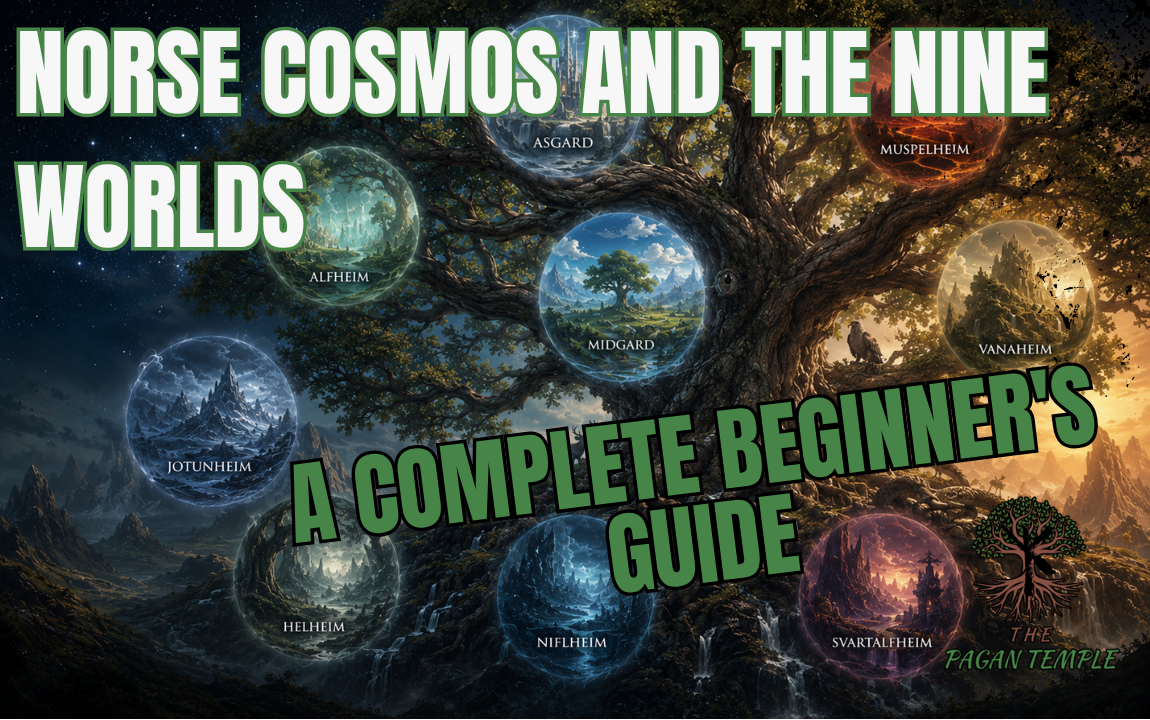
The Norse tradition describes the Norns, three great weavers named Urd, Verdandi, and Skuld, whose common translations are past, present, and future, though the etymology is more nuanced than that. They sit at the base of Yggdrasil and weave the threads of fate for gods and mortals. This image is almost universally understood as determinism: the Norns weave your life, therefore your life is determined before you live it.
But look at the names more carefully. Urd comes from the same root as wyrd, meaning what has come to pass. Verdandi means what is happening now. Skuld means what is owed or what is required. These are not past, present, and future as categories of time. They are the accumulated weight of what has already happened, the present moment of action, and the consequence that is owed based on both. That is a different framework than determinism.
The concept is closer to this: fate is the accumulated weight of all previous choices and actions, pressing on the present moment and shaping what emerges from it. The past is real and consequential. What you have done has determined what is now possible and what is now required. But the present moment of action is still genuinely yours. Verdandi is not fixed. It is where you actually live.
Wyrd in the Old English Sources
The Old English texts use wyrd in ways that confirm this reading. In Beowulf, wyrd is something that happens to people and around which they must navigate. The hero cannot escape death, which wyrd has appointed for everyone. But what matters is how he meets it, with courage, with loyalty to his people, with the full expression of what he is. “Wyrd bith ful araed” means that the inevitable is inevitable. It does not mean that nothing between now and the inevitable is worth doing or can be done well.
The Old English elegies, poems like The Wanderer and The Seafarer, engage with wyrd as a kind of weight that presses on human life. The loss of the meadhall, of companions, of the order and beauty of the world, these are all framed as things that wyrd brings. But the response the poems call for is not resignation. It is a kind of clear-eyed endurance: knowing what wyrd brings, choosing to face it with integrity rather than despair.
This is a very specific and demanding ethical posture. It requires you to know what you cannot change without flinching away from it, and to focus your energy on how you respond to what you cannot change rather than on trying to evade or deny it.
The Practical Implications
If wyrd is the accumulated weight of what has already happened pressing on what happens next, then the ethical implications are significant. Your choices matter. Every choice you make becomes part of the weight of the past that will press on every future moment. This is not a small thing. It means that how you act now is literally shaping the fate of everything that comes after, for you and for everyone connected to you.
The Havamal, the Old Norse wisdom poem attributed to Odin, is full of practical advice oriented exactly around this understanding. You build your reputation through repeated action over time. Your word, given and kept, becomes part of the fabric of who you are. Your relationship with the community, the obligations you honor and the ones you break, accumulate into a destiny that you have substantially authored through your own choices.
This is not comfortable in the way that some modern spiritual frameworks are comfortable. It does not tell you that everything happens for a reason, or that you are guided toward your highest good, or that the universe is arranging events for your benefit. What it tells you is that you are responsible, in the most serious possible sense, for the weight of what you are building with your choices, and that weight will have consequences you cannot fully predict or control.
Fate and Agency Together
The Norse and Old English sources do not resolve the tension between fate and agency. They hold both at once. You are not free of the past. You cannot escape the consequences of what has already happened. And your present choices are genuinely yours, genuinely consequential, genuinely shaping the fabric of what comes.
What the tradition asks is not that you choose between these two truths but that you hold them both clearly. The warrior who knows he will die in battle and fights anyway is not fighting because he believes he might survive against fate. He is fighting because his action in the face of the inevitable is the thing that belongs to him. How you meet what wyrd brings is your contribution to the ongoing story.
That is a harder and more honest approach to fate than either pure determinism or pure free will provides. It is one of the most distinctive and demanding features of this tradition’s worldview, and it is worth engaging with seriously.