Norse
In 1841, a scholar named Georg Waitz was cataloguing manuscripts in the cathedral chapter library at Merseburg when he found something unusual. In the margin of a 9th-century liturgical manuscript, written in Old High German, were two short healing charms. They were...
Norse
In the year 1000 CE, a lawspeaker named Thorgeirr Ljosvetningagodhi lay down under his cloak at the Althing, the Icelandic assembly, and remained there for a full day and night. When he emerged, he announced his decision: Iceland would be Christian. Private practice...
Norse
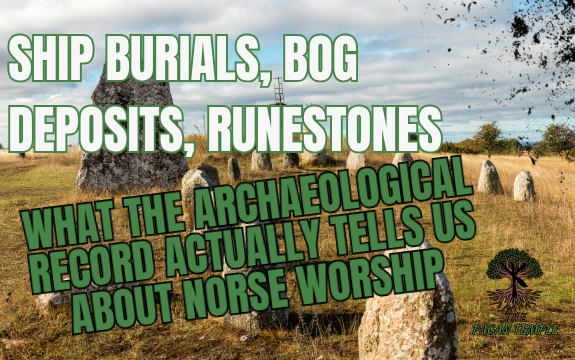
The Norse people buried their religion in the ground. Not figuratively. Literally. They buried it with their dead, deposited it in lakes and bogs, carved it into stone, and pressed it into metal. The textual sources for Norse religion were written by Christians. The...

Norse
Tacitus was not writing a field guide to Germanic religion. He was writing a political critique of Roman decadence in the form of an ethnographic account of the Germanic peoples. The Germania, written in 98 CE, praises Germanic virtue, simplicity, and moral vigor as...
Norse
Every winter, across the German-speaking world, the dead ride through the night sky. In Middle High German they were called Wuotanes Her, Odin’s Army. In modern German, Wutendes Heer, the Furious Host, or Wilde Jagd, the Wild Hunt. The scholar Jacob Grimm...
Norse
The most common mistake new practitioners make is treating the Prose Edda like a Bible. They read it as though Snorri Sturluson was a reporter faithfully transcribing a living religious tradition. He was not. He was a 13th-century Christian Icelandic politician...
Affiliate Disclosure
